
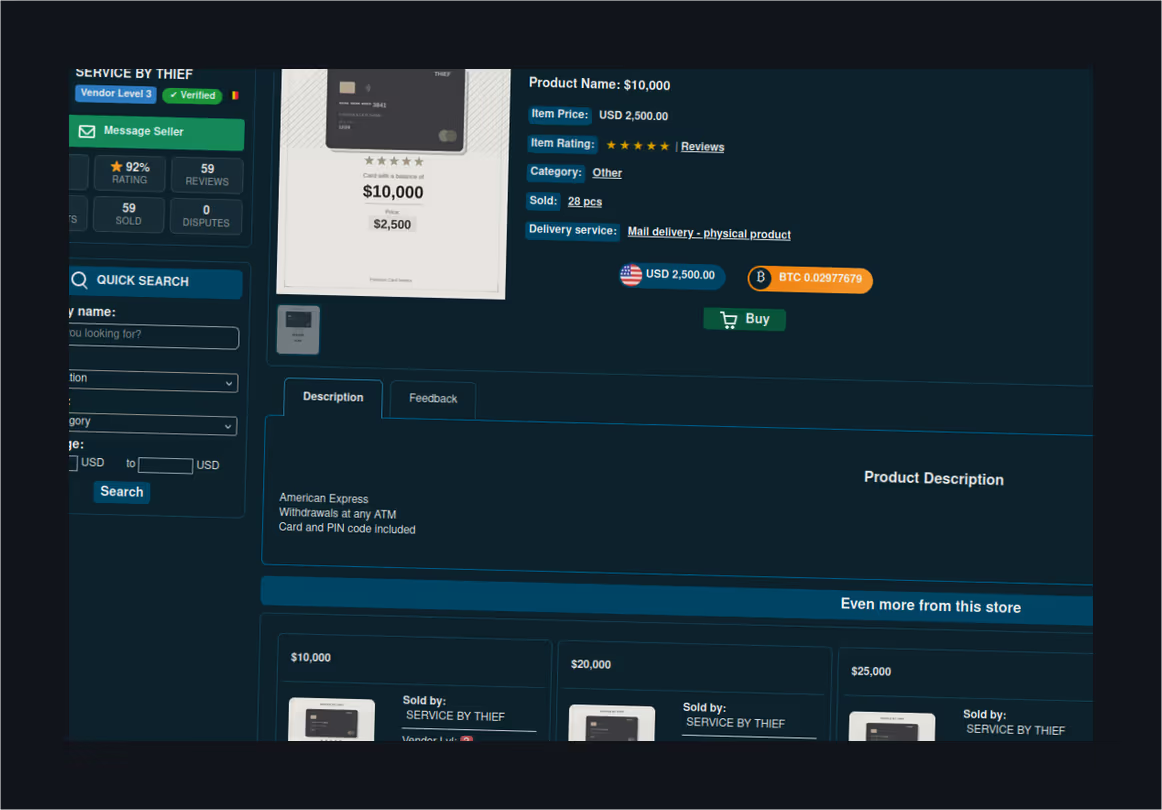
In November 2024, a 34-year-old from Tampa Bay bought six cloned debit cards on a darknet marketplace for $480 in Monero. He cashed out $4,200 from three ATMs in Florida, Georgia, and North Carolina before the fourth one became his downfall. This isn’t a guide to carding—it’s a cautionary tale about how a supposedly airtight scheme unraveled in just 72 hours. The website where the purchase was made might promise anonymity, but the physical world has a way of exposing even the most careful criminals.
How Carding Works: The Chain of Fraud
Carding has become a prevalent issue on the dark web, and Mark’s method was not unique:
Data Gathering – Criminals gather magnetic stripe information (track 1/track 2) through various tactics such as ATM skimming devices, phishing schemes, or by acquiring details from dark web marketplaces. A quick look for carding forums dark web or cloned cards reddit illustrates the vast scale of this operation.
Card Creation – The stolen data is subsequently transferred onto blank cards that are expertly crafted to resemble authentic payment cards. In an instant, you possess a counterfeit card that can effortlessly pass as genuine.
PIN Capture – If the PIN is captured (possibly via a hidden camera), the buyer now holds a fully operational card. Sadly, no credit card skimmer protector will shield you once your data is compromised.
Withdrawal of Cash – The buyer hurriedly heads to ATMs before the victims can take steps to protect their accounts. This is precisely when a credit card skimming device detector would have been a lifesaver for the innocent cardholders.
Money Laundering – Cash is swiftly converted into cryptocurrency via Bitcoin ATMs or peer-to-peer networks, creating the façade of disappearing funds—until they are eventually traced.
In Mark's scenario, he subtly ordered 6 cloned cards, spending $480 and using Monero, a cryptocurrency that maintains user anonymity. He thought he was in the clear. But don’t forget, ATMs are not just for cash withdrawals—they’re monitoring your every move.
The ATM’s Hidden Superpower: Cameras That Don’t Blink
Mark had a limited view of what ATMs could do, thinking they merely dispensed cash. However, these devices are equipped with advanced technology that plays a crucial role in crime prevention:
- Integrated camera – Records video at 1080p resolution and often includes night vision capabilities.
- Concealed camera – Provides an additional angle, completely unnoticed.
- Transaction records – Logs essential information such as time, amount, card number, ATM ID, and status, all with precise timestamps.
- Geolocation information – The machine is aware of its exact location.
- Server interactions – Every communication with the bank’s network is meticulously tracked.
As Mark neared the fourth ATM, the integrated camera recorded his unaltered appearance. Just 23 seconds of this footage was enough for law enforcement to identify him swiftly. If you're on the lookout for skimmers, keep an eye out for any strange attachments; relying solely on online guides might not be the best approach.
Did you know? Many offenders believe the dark web shields their actions, but ATMs can expose their misdemeanors with just a camera.
The Investigation: A 15-Day Countdown to Arrest
As the investigation progressed, the urgency of the situation became clear. Here’s how the events unfolded:
Day 1 (November 2024) – Three victims reported unauthorized withdrawals from their accounts in Florida, Georgia, and North Carolina. The banks quickly blocked the affected cards and activated their fraud detection protocols.
Day 3 – The bank's security systems detected a suspicious trend: a series of withdrawals using cloned cards from various states, prompting a deeper review.
Day 5 – The U.S. Secret Service took over the case, requesting transaction logs and surveillance footage from the relevant ATMs.
Day 8 – Surveillance footage from a specific ATM captured a clear image of a suspect. By correlating this with data from Florida’s Department of Public Safety, investigators pinpointed Mark T., a first-time offender. The examination disclosed that all questionable transactions occurred within a 40-mile radius of his residence.
Day 12 – Authorities obtained a search warrant to gather digital evidence. Records from Internet Service Providers indicated activity on Tor exit nodes that matched the timing of the unauthorized withdrawals. Mark’s Monero wallet was traced to transactions on a darknet marketplace, enabled by a court order targeting the exchange he used.
Day 14 – Authorities carried out a search warrant at Mark’s residence. They found six unmarked cards, a device for reading and writing magnetic stripes, a laptop containing evidence of illegal activities, and $3,200 in cash, along with packaging materials related to the transactions.
Day 15 – Mark was arrested. During interrogation, he confessed to using four of the six cards, stating that the other two had been deactivated by his bank before he could utilize them.
Pro tip: If you’re on the lookout for potential skimming devices, keep an eye out for anything that looks suspicious. Just remember, those up to no good often find it tricky to evade surveillance!
The Numbers: Cold, Hard Facts
A single operation can unravel into a costly and lengthy legal consequences, as shown by the real numbers behind the scheme.
| Event | Details |
|---|---|
| Fines and repayment total | $22,000 |
| Total taken out | $4,900 |
| Price for fake cards | $480 |
| Days between first withdrawal and arrest | 15 |
| Jail time in federal prison | 5 years (60 months) |
| Cash machine withdrawals | 4 |
| Post-release monitoring period | 3 years |
Mark faced a hefty price to pay, losing not just his freedom but also his reputation and finances. It’s safe to say that no amount of card security could have saved him in this situation.
Why Monero Failed to Protect Mark
Monero is designed for anonymity, but Mark’s chain broke at the weakest links:
- KYC Exchange – He bought Monero via a centralized exchange that required ID verification. A court order revealed his identity and transaction history.
- Time Window – Purchase, delivery, and cash-out all happened within two weeks. The coincidence was too damning to ignore.
- Physical Evidence – The cloned cards found in his home matched the stolen dumps. Crypto can’t erase that.
- Video Footage – A face on camera is undoctored proof. Even with perfect crypto, the physical world caught up.
Lessons: If you’re searching atm skimmer images to avoid fraud, remember—cameras are the real threat to criminals.
Mark’s Six Fatal Mistakes
Withdrawal Locations – Mark consistently withdrew cash within a 40-mile radius of where he lived, which set off alarms in fraud detection systems almost immediately.
No Disguise – He didn’t take any measures to hide his identity at the ATMs, making it a breeze for law enforcement to recognize him through video footage.
Buying Cryptocurrency from a Centralized Exchange – His identity became tied to his purchase of Monero, thanks to the KYC requirements imposed by the exchange he utilized.
Evidence Discovered at His Residence – Law enforcement found a number of incriminating items at his place, including cards, a magnetic stripe reader, and laptop data that strengthened their case. Even the files he believed were deleted still provided valuable leads.
Cash Discovered – The $3,200 found at his residence corresponded with the denominations from the ATMs. This detail, while seemingly trivial, contributed significantly to the overall evidence.
Rapid Withdrawal Transactions – All of his transactions took place within a two-week span. While spreading them out could have delayed detection, he would eventually have been caught on camera.
So, what can we take away from this? While being able to spot a skimmer is helpful, don't underestimate the risks posed directly by the ATM itself.
Lessons for Security Pros
Mark’s case isn’t about a criminal mastermind—it’s a testament to how well the system works. Key takeaways for security professionals:
- Anti-Fraud Systems Work – Banks’ ML models and pattern analysis caught this automatically. Invest in anomaly detection.
- Physical + Digital Forensics = Unbeatable Combo – The ATM video was useless without the transaction log. Integrate both for investigations.
- Crypto Isn’t a Get-Out-of-Jail-Free Card – KYC exchanges and cash exit points link the digital to the physical. Full anonymity is a myth.
- Customer Education Saves Money – The faster victims report fraud, the faster banks block cards. Reduce damage with proactive education.
Final thought: The card skimming protection you need starts with awareness—both for users and investigators.
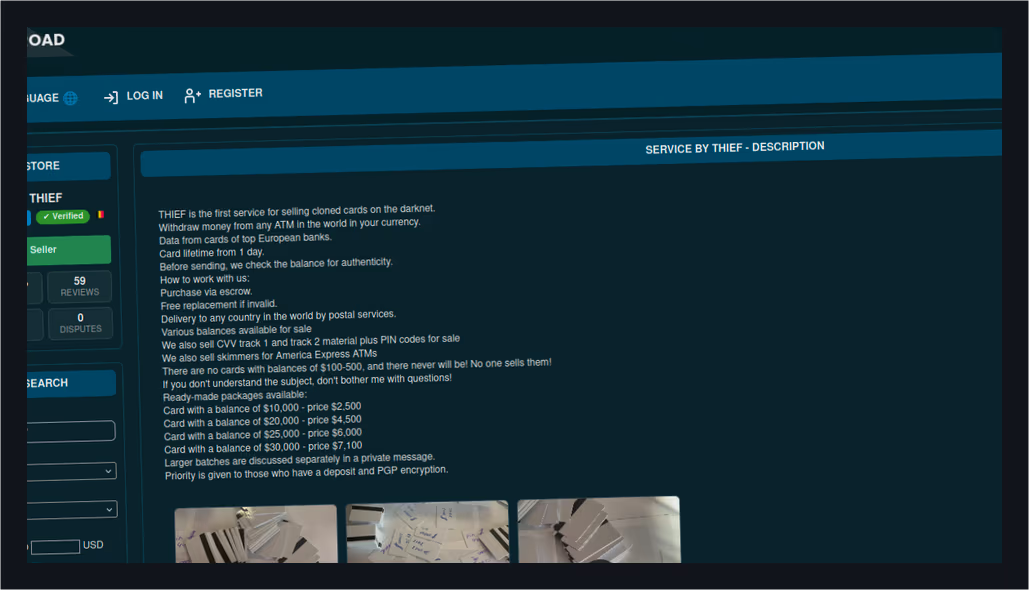
The Verdict: A 5-Year Lesson in Fraud
In March 2025, Mark T. admitted his guilt regarding his participation in fraudulent activities and money laundering, as defined under 18 U.S.C. § 1029 and § 1957. He was sentenced by a federal court in Florida to 60 months behind bars and a financial penalty of $22,000, along with a three-year supervised release. The judge emphasized that while Mark was not the architect of the fraudulent operation, he was indeed a key player as the final consumer in the scheme. It’s important to note that being at the end of the line often results in the harshest penalties, serving as a sobering reminder of the risks involved!